

Semi-permanent dye is the smartest way to experiment with hair colour — no bleach damage, no long-term commitment, and zero harsh chemicals. In this guide, you’ll learn exactly how to use semi-permanent hair colour on bleached hair, apply it on natural brown tones, choose the best hair colour professional brand, and master everything from toning colour hair to bold semi-permanent pink hair dye. Every answer you need is right here.
What Exactly Is Semi-Permanent Dye — and Why Does It Matter?
If you’ve colored your hair before and ended up regretting it just a few weeks later, then semi-permanent hair dye may be the solution you haven’t tried yet. Unlike permanent hair color, it coats the hair shaft externally with the pigment rather than breaking through the cortex. So, this means absolutely no ammonia, no developer, and no forever lock-in to a hair color that you may dislike the following month.
Here is the part most people do not realize: semi-permanent color actually conditions your hair as it colors. The formula coats each strand with pigment, adding shine and reducing frizz simultaneously. It typically lasts 6–12 washes, fading gradually and naturally — never leaving a harsh grow-out line.
- No ammonia or peroxide: works on the hair surface, not inside the cortex
- Conditions while it colors: many formulas include keratin or argan oil as conditioning agents
- Gradual, beautiful fade: no harsh lines as it washes out over 6–12 shampoos
- Safe for frequent use: you can reapply every 3–4 weeks without causing damage
- Perfect for experimentation: try bold or subtle shades without any long-term risk
Using Semi-Permanent Hair Colour on Bleached Hair: The Full Picture
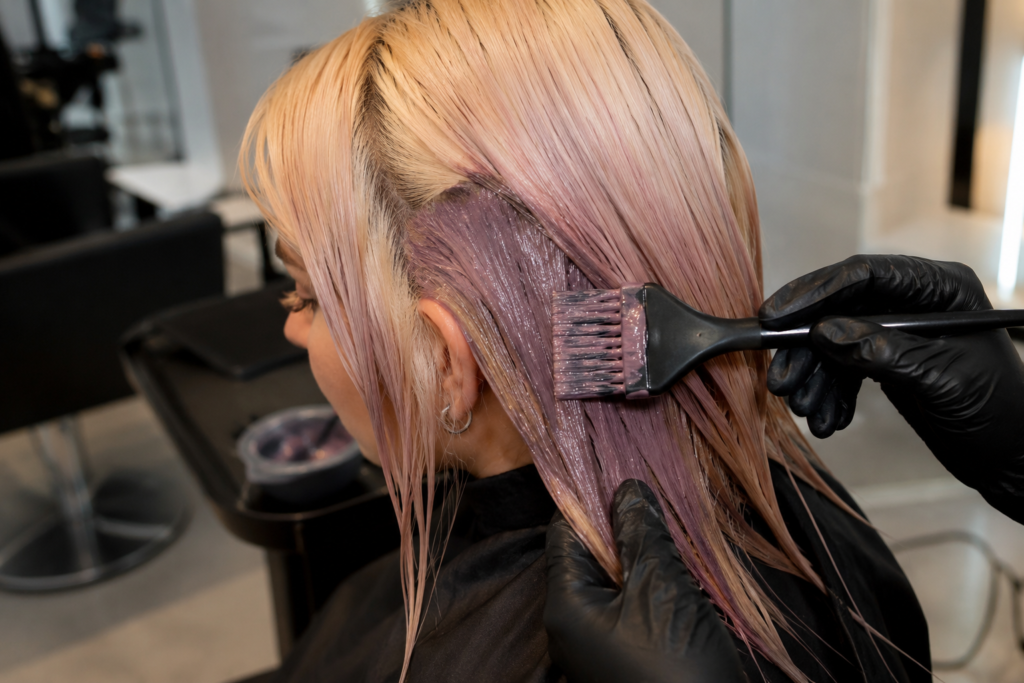
Semi-permanent color on bleached hair works best on hair that has been bleached to create a very light base; however, such hair is also the most delicate. When the hair is lifted to a pale yellow or white, the cuticle is open and very thirsty. This gives the hair quick, deep color absorption and vibrant, saturated results. At the same time, this also indicates that the color will fade at a much faster rate than hair that has not been processed.
The secret is getting the hair ready for the treatment. Your hair after bleaching should be in good condition before you even think of putting semi-permanent dye on it, no excessive breakage, no gummy texture. Below you will find the step-by-step method that professionals keep to each time:
- Deep condition 24–48 hours before — Deep condition 24 or 48 hours before. Take advantage of protein treatment or a bond-building mask. A healthy and well-sealed cuticle is not only more receptive to color but will also hold it for a longer time.
- Apply to dry hair — Put on dry hair. Pigment gets diluted by water. For semi-permanent color to be the richest and most saturated, apply it on clean, completely dry hair.
- Section carefully — Divide your hair into four sections. Work from the back to the front for even, full saturation.
- Use a tint brush or gloved hands — A tint brush gives precision. Gloved hands help work the color thoroughly into every strand.
- Process under heat for deeper results — Sit under a hooded dryer or use a shower cap for 30–45 minutes. Heat allows more pigment to settle in.
- Rinse with cool water only — Cool water seals the cuticle and locks color in. Hot water is your biggest enemy after coloring.
| PRO TIP: Mix a little conditioning treatment with your semi-permanent pink hair dye or any bright color if you decide to go for bleached hair. Besides helping the dye spread evenly through your hair, it will also decrease the chance of the most porous areas worsening notably around the hairline and ends. |
Can You Use Semi-Permanent Hair Dye on Brown Hair?
Absolutely — but with realistic expectations. Semi-permanent hair dye on brown hair works best for enhancing your existing tone, adding warmth, or creating beautiful dimension. Because the dye sits on top of the hair shaft, it cannot lighten your natural color. Instead, it deepens and enriches what is already there.
For brunettes, the most effective semi-permanent shades are those in the same color family as your base or slightly deeper. Think brunette semi-permanent hair color in chocolate brown, mahogany, chestnut, or cool ash tones. These shades blend seamlessly and give your hair a freshly-colored, glossy finish without any commitment.
- Chocolate or chestnut shades — Enhance warmth and richness on medium brown hair beautifully
- Mahogany and red-brown tones — Add dimension and a sun-kissed effect to dark brunette hair
- Cool ash or smoky brown — Neutralize unwanted brassiness on color-treated brunette hair
- Black-brown shades — Refresh faded permanent color between your salon visits
If you have dark brown or black hair and want a truly vivid result — say, semi-permanent pink hair dye — you will need to pre-lighten your hair first. On unbleached dark hair, bright shades simply will not show up visibly.
How Does Toning Color Hair Work with Semi-Permanent Formulas?
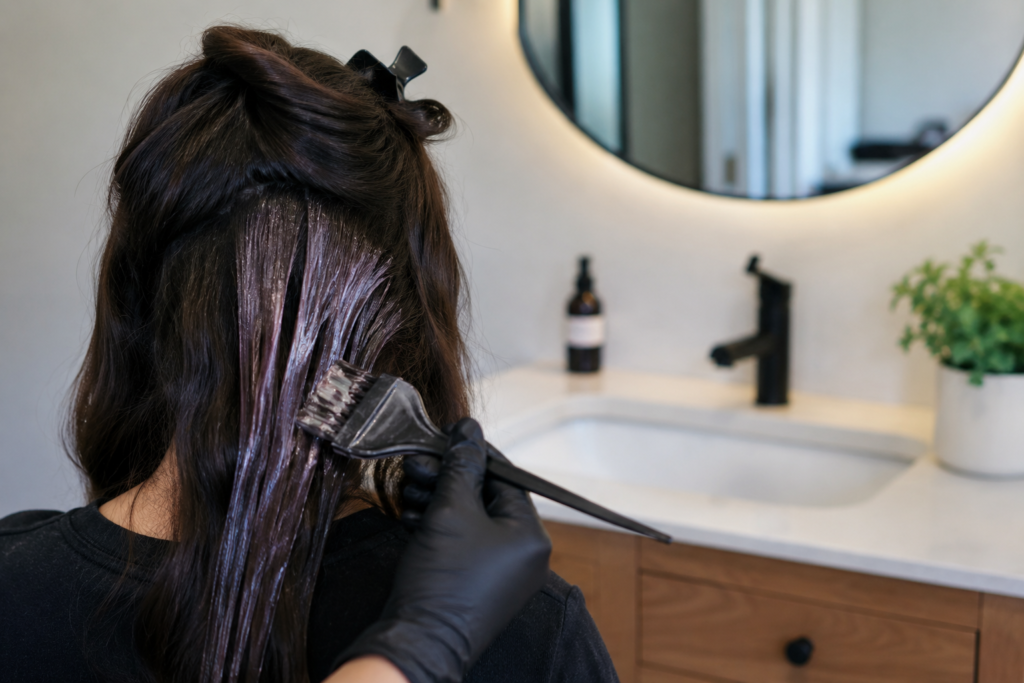
Toning color hair is one of the most underrated uses of semi-permanent dye — and it is something professional stylists do after every bleaching session. A toner is simply a semi-permanent or demi-permanent color applied to freshly lightened hair to neutralize unwanted warm tones. Yellow and orange undertones after bleaching? A purple or blue-based toner cancels them out using the color wheel.
Here is why this matters for you: if you are maintaining bleached or highlighted hair at home, a weekly or bi-weekly toning treatment keeps your color looking fresh, bright, and salon-quality. You do not need to visit a salon every time your blonde starts going brassy. A well-chosen toning semi-permanent formula does the job in under 30 minutes from your bathroom.
- Purple/violet toners — Neutralize yellow tones on light blonde and platinum hair
- Blue toners — Cancel out orange tones on medium-blonde or lightened brunette hair
- Green toners — Correct red or pink tones on dark blonde or warm-toned shades
- Rose or peach toners — Add warmth back to over-toned, ashy blondes that look too grey
Choosing the Best Semi-Permanent Pink Hair Dye: What Really Matters
Pink is consistently one of the most searched and loved shades in the semi-permanent color category. Whether you want a soft rose, a hot fuchsia, or a muted dusty pink, the market offers an enormous range. But not all best pink hair dye formulas are created equal. Here is what separates a great formula from a mediocre one:
- Pigment concentration: Higher pigment means more vibrant color and significantly longer-lasting results
- Conditioning agents: Look for formulas with keratin, argan oil, or shea butter to protect bleached hair from dryness
- Vegan and cruelty-free certification: Especially important if you prefer clean, ethical beauty choices
- Fade quality: The best formulas fade to a pretty pastel, not a muddy or unflattering tone
- Mixability: Can you mix it with conditioner to create custom pastel shades? Versatility is a huge advantage
For the most vivid pink results, your hair should be lightened to a pale yellow or white before application. The lighter the base, the truer the pink. On a medium yellow base, semi-permanent pink hair dye will read more peachy or salmon, which can be equally beautiful, but it is worth knowing before you apply.
Quick Comparison: Semi-Permanent Dye by Hair Type
| Hair Type | Best Shade | Expected Result | Longevity | Pro Tip |
| Bleached / White | Vivids, pastels, pink, fashion shades | Highly saturated, true-to-color result | 6–10 washes | Deep condition before applying; always rinse cool |
| Light Brown | Caramel, honey, golden auburn | Subtle warm glow with enhanced shine | 8–12 washes | Apply to dry hair for best color pickup |
| Medium Brown | Mahogany, chestnut, chocolate | Richer, deeper tone with dimension | 10–14 washes | Great for refreshing faded permanent color |
| Dark Brown / Black | Dark chocolate, espresso, black-brown | Enhanced shine; minimal visible color shift | 12–16 washes | Vivid shades need pre-lightening to show |
| Grey / Silver | Pastel pink, lavender, silver toners | Beautiful, even pastel wash of color | 6–10 washes | Grey is very porous; start with less product |
How to Choose the Best Hair Color Professional Brand
Walk into any beauty supply store, and the shelves are overwhelming. Choosing the best hair color professional brand for semi-permanent dye comes down to five non-negotiable factors: pigment quality, ingredient safety, shade range, fade quality, and your specific hair goals.
Professional-grade brands are formulated with a higher concentration of pigment and often include ingredients that protect and strengthen the hair during coloring. If you are serious about color results — especially on bleached or treated hair — investing in a professional formula is always worth it. Here is what to look for on every label:
- Check the ingredient list: Avoid formulas with alcohol, sulfates, or parabens. These strips color significantly faster.
- Look for conditioning actives: Argan oil, keratin, collagen, or panthenol protect the hair structure during and after coloring.
- Choose a wide shade range: More options mean more ability to mix and customize your perfect tone with precision.
- Read fade reviews: A great formula fades to a flattering tone, not something muddy or unexpected.
- Consider vegan or clean formulas: Ammonia-free and cruelty-free brands are now of fully professional quality.
Maintaining Your Semi-Permanent Brown Hair Color: Expert Aftercare
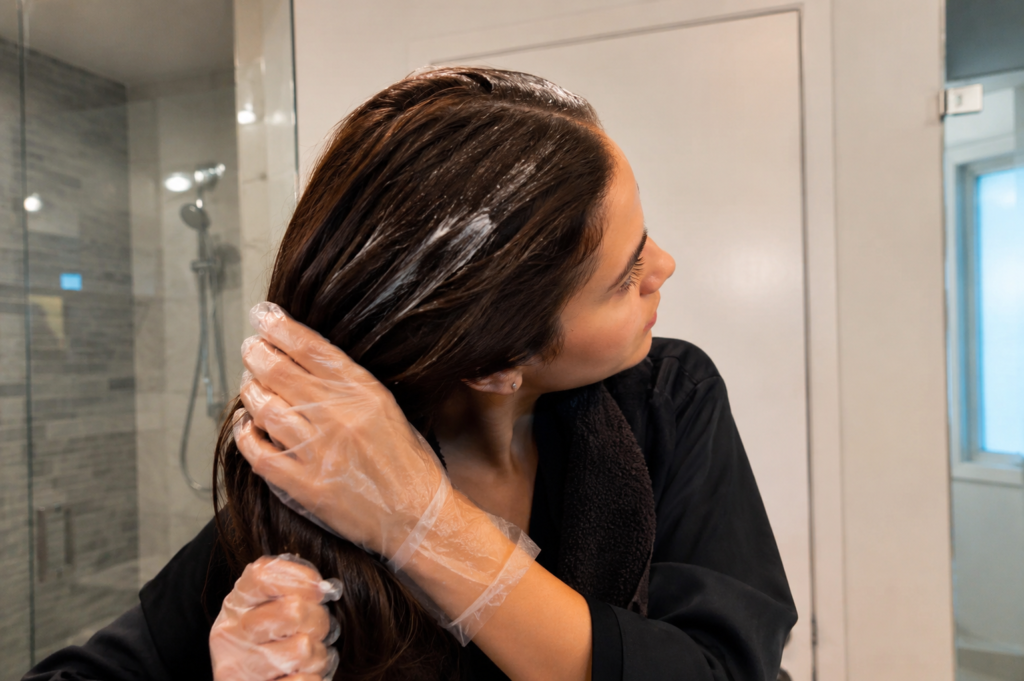
The application is only half the story. Proper aftercare is what keeps your semi-permanent brown hair color — or any semi-permanent shade — looking fresh and vibrant for as long as possible. The biggest mistake most people make is washing their hair too frequently with the wrong products right after coloring.
- Wait 48–72 hours before your first wash: Give the pigment time to fully settle into the cuticle before any water contact.
- Use sulfate-free, color-safe shampoo: Sulfates strip color at an alarming rate. Switch your shampoo before you even pick up the dye.
- Wash in cool or lukewarm water: Every hot shower significantly speeds up fading. Cool water seals the cuticle and locks color in.
- Apply a color-depositing conditioner weekly: This extends vibrancy between full applications and keeps the tone fresh and even.
- Protect hair from sun exposure: UV rays rapidly degrade color molecules. Use a UV-protective hair serum or wear a hat outdoors.
- Limit heat styling: Flat irons and curling wands strip color fast. Always use a heat protectant spray when styling.
| EXPERT NOTE: Brunette semi-permanent hair color applied to previously colored or chemically treated hair tends to last longer than on virgin hair. Slightly porous strands absorb and hold more pigment, which is exactly why professional stylists use semi-permanent color to extend and refresh salon results at home between appointments. |
Is Semi-Permanent Dye Safe for All Hair Types?
One of the biggest advantages of semi-permanent dye is its universal compatibility. Because it contains no ammonia and no developer, it is safe for virtually all hair types — from fine and fragile to thick and coarse. However, there are a few important nuances to know depending on your specific hair condition:
- Fine or fragile hair: Semi-permanent formulas are the safest choice. Avoid excessive heat processing to prevent any stress on delicate strands.
- Chemically relaxed or permed hair: Always do a strand test first. Chemically processed hair can be unpredictable in how it absorbs color.
- Natural or coily hair: Semi-permanent dye works beautifully for color experimentation without compromising the curl pattern or texture.
- Coloured or highlighted hair: Ideal for refreshing faded color between salon visits, especially for semi-permanent brown hair color maintenance.
- Grey or silver hair: Grey is highly porous and absorbs color deeply. Apply sparingly and check frequently to avoid over-saturation.
5 Common Semi-Permanent Dye Mistakes — and How to Avoid Them
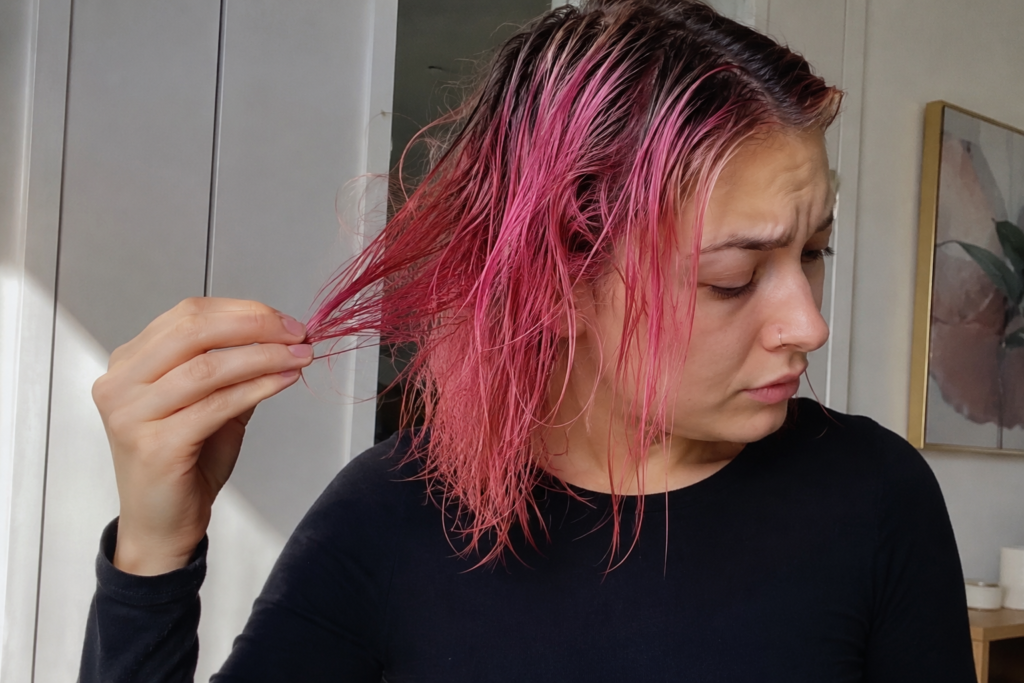
After years of covering hair care in depth, these are the five mistakes that appear most consistently — and each one is completely avoidable with the right knowledge:
- Applying to wet hair: Wet hair dilutes the pigment significantly. Always apply semi-permanent color on bleached hair or any hair type when it is clean and completely dry for the deepest, most saturated result.
- Skipping the patch test: Even without ammonia, a reaction is possible. Always perform a patch test behind the ear 48 hours before your first application.
- Using regular shampoo after coloring: Sulfate shampoos are the fastest way to strip your fresh color. Switch to a color-safe, sulfate-free formula before you color.
- Not applying enough product: Semi-permanent dye needs full saturation to work. Be generous. Every strand should be completely coated with the dye.
- Washing immediately after coloring: Waiting 48–72 hours before your first wash gives the pigment time to settle fully and dramatically extends longevity.
Frequently Asked Questions About Semi-Permanent Dye
A: Semi-permanent hair dye on bleached hair normally lasts for about 6 to 10 washes. Since bleached hair is very porous, it takes color more intensely but at the same time loses it more quickly. The color will last much longer if a sulfate-free shampoo is used and always rinsed with cool water.
A: Semi-permanent pink hair dye on dark or medium brown hair without bleaching is unlikely to give you a pink look that is visible. In fact, you may only notice a slight warm or reddish tint when you are outside in bright sunlight. If you really want a pink, you need to bleach your hair to at least a medium blonde level before applying any vivid shade.
A: Use a toning color hair product in a violet or blue-based semi-permanent formula. Apply to clean, towel-dried hair and leave on for 10–30 minutes, checking every 5 minutes. Rinse with cool water. Repeat weekly or bi-weekly as needed to maintain a fresh, brass-free result.
A: Yes, semi-permanent dye is ammonia-free and developer-free, making it genuinely safe for frequent use. You can reapply every 3–6 weeks without damaging your hair. In fact, many formulas improve hair condition over time due to their built-in conditioning agents, such as keratin and argan oil.
A: The best hair color professional brand formulas contain higher pigment concentrations, better conditioning ingredients, and more stable dye chemistry. This translates directly to richer color payoff, more even coverage, and a more flattering fade — all of which make a significant difference, especially on bleached or chemically treated hair.
Conclusion: Your Color Journey Starts Here
Are you considering using semi-permanent pink hair dye on freshly bleached hair, or simply looking to refresh your brunette semi-permanent hair color at home? The right technique will make all the difference. Semi-permanent dye is one of the most versatile, safe, and effective tools in modern hair care. When you understand how it works, your results will always be stunning, consistent, and salon-worthy.
The secret every professional stylist knows is this: preparation, application, and aftercare are equally important. Get all three right, and your color will last longer, look better, and fade more gracefully than you ever expected. From toning color hair to choosing the best hair color professional brand, each step in this guide is based on years of practical experience and tested results. You have the entire picture, and no question should remain unanswered.
Want to continue? Check out our complete collection of semi-permanent dye guides, shade comparisons, and expert product recommendations. Give your hair a makeover with total assurance, as now you know exactly what you are doing.
DISCLAIMER
The information provided in this blog is for educational and informational purposes only. Results from semi-permanent hair dye vary depending on hair type, prior chemical treatments, application technique, and aftercare routines. Always perform a patch test 48 hours before full application to check for allergic reactions. Consult a professional hairstylist if you are unsure about the suitability of any product for your specific hair condition. The author and website are not responsible for any adverse reactions resulting from the use of hair color products mentioned or discussed in this guide.