
Walk into any Indian wardrobe, and two things will always show up, kurtis and salwars. They have been the backbone of everyday ethnic dressing for decades, yet most women pick them by habit rather than intention. Understanding the different types of kurtis and how they pair with various types of salwar makes getting dressed much easier.
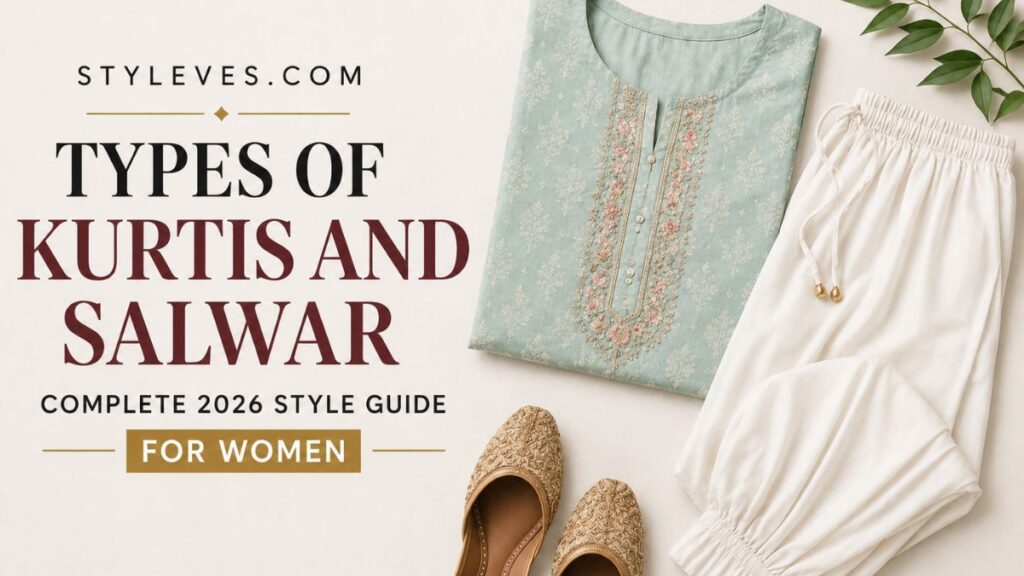
This guide covers the most relevant types of kurtis and salwar in 2026, what each style looks like, who it flatters, and how to wear it.
Why Choosing the Right Kurti and Salwar Combination Matters?
A kurti worn with the wrong salwar can flatten a great outfit before you even step out. A flared Anarkali with wide palazzo pants, for example, creates visual chaos — too much volume everywhere. A straight-cut kurti with a churidar, on the other hand, looks clean, intentional, and pulled together.
The key is understanding what each piece does on its own first.
Types of Kurtis for Women: Styles, Occasions and What Suits You
Straight Cut Kurti: The Most Versatile Kurti Style for Daily Wear
A straight cut kurti falls evenly from the shoulder to the hem with no flare. It suits rectangle and apple body types particularly well and works across almost every occasion — college, office, casual outings, festive days.
Pair with churidar for a polished look, or tuck into trousers for office wear.
A-Line Kurti: The Most Flattering Kurti Design for All Body Types
Fitted at the bust and shoulders, then gradually widens toward the hem, like the letter A. This is arguably the most universally flattering of all kurti designs, because it skims over the hips without clinging. Pear and hourglass body types love it.
Works beautifully with straight pants, leggings, or palazzos. Avoid pairing with flared salwar, as it adds unnecessary volume at the bottom.
Anarkali Kurti: Classic Festive Kurti Style That Never Fails
The one that never goes out of fashion. Anarkali kurtis are fitted at the bodice with a dramatic flare toward the hem, inspired by Mughal-era court wear. The silhouette feels festive for occasions like weddings, Diwali, sangeets, and receptions.
Since the kurti itself carries volume, keep the bottom lean. A churidar or fitted legging is the right call here.
Angrakha Kurti: Traditional Wrap Style with a Modern Edge
Less common but worth knowing, the Angrakha kurti wraps across the front and ties at the side. The asymmetric neckline is its defining feature. It works well on pear and hourglass shapes, accentuating the waist naturally.
Style with leggings or churidar and ethnic juttis for a complete traditional look.
High-Low Kurti: Contemporary Kurti Style for Casual Wear
Shorter at the front, longer at the back, the high-low kurti adds a contemporary edge to ethnic dressing. It works for casual outings and college wear, and suits most body types because the varying hemline draws the eye vertically.
Pair with jeggings or fitted pants. Avoid wide-leg bottoms as they disrupt the visual balance the hemline creates.
Shirt-Style Kurti: Best Kurti for Office Wear
Collar, buttons, and sometimes breast pockets — the shirt-style kurti borrows its silhouette from Western tailoring but keeps the length ethnic. It is the most office-appropriate kurti style, looking sharp with straight trousers or cigarette pants.
This style suits athletic and rectangular body types best. Add a structured bag and flats for a put-together workday look.
Types of Salwar: Classic and Modern Bottom Wear with Kurtis
Straight Salwar: Simple and Versatile Everyday Option
The original. A straight salwar has a relaxed fit through the thigh that tapers gently at the ankle. Simple, clean, and versatile — it pairs with nearly every kurti silhouette, which is exactly why it has stayed relevant for generations.
For daily wear or office wear, the straight salwar is almost always the safest pairing.
Patiala Salwar: Traditional Punjabi Style with Volume
With volume, pleats, and personality, the Patiala salwar is native to Punjab and is known for its generous fabric that creates bold folds from the hip down. It is festive, fun, and unexpectedly comfortable.
Best paired with short, fitted kurtis. A long or flared kurti over a Patiala creates too much fabric in one frame. Keep the top short and let the salwar do its work.
Churidar: Fitted Salwar That Enhances Kurti Silhouettes
The churidar is a fitted bottom that hugs the leg and gathers in horizontal folds around the ankle; those folds are what give it its name. It elongates the legs beautifully and is the go-to pairing for Anarkali and Angrakha kurtis.
Works best when the kurti above is flared or has volume. The contrast between a fitted bottom and a dramatic top is exactly what makes this combination work.
Palazzo Pants: Modern Wide-Leg Salwar Alternative
Wide-legged, flowy, and effortlessly comfortable, palazzo pants have firmly planted themselves in the salwar category. While not a traditional salwar, they are now worn as a salwar substitute and pair brilliantly with straight-cut and A-line kurtis.
For casual and semi-festive occasions, a cotton kurti with printed palazzos is one of the most reliable outfit combinations in Indian ethnic wear.
Dhoti Salwar: Statement Ethnic Bottom for Experimental Looks
The dhoti salwar takes inspiration from the traditional dhoti. It features cowl drapes and pleats at the front that give it a distinctive gathered silhouette. It pairs best with short, fitted kurtis and suits women who like to experiment with their ethnic looks.
It is a statement of ethnic bottom. Let the kurti stay minimal so the salwar gets its moment.
Kurti and Salwar Combinations: What Works Best Together
If you’re unsure which kurti style works best with various types of salwar, here is a quick reference:
- Anarkali kurti: churidar or leggings
- A-line kurti: straight salwar or slim-fit pants
- Straight cut kurti: palazzo, churidar, or straight salwar
- Shirt-style kurti: cigarette pants or straight salwar
- High-low kurti: jeggings or fitted leggings
- Angrakha kurti: churidar or leggings
- Short kurti: Patiala salwar or dhoti salwar
The logic is simple — when the kurti has volume, the bottom should be fitted. When the kurti is minimal, the bottom can carry the drama.
FAQs About Types of Kurtis and Salwar
Straight cut and A-line kurtis are the top choices for daily wear, both are comfortable, easy to style, and work for office as well as casual outings.
Patiala salwar is a classic pick for festive events. For more polished occasions like weddings, a churidar paired with an Anarkali kurti is a timeless combination.
The A-line kurti is widely considered the most universally flattering — it fits snugly at the top and flares at the bottom, working well across different body shapes.
A traditional salwar tapers at the ankle, while palazzo pants have wide, straight legs throughout. Both are worn as bottom wear with kurtis, but palazzos have a more contemporary, relaxed look.
Yes, but keep the kurti short (ideally hip-length). A long, straight kurti over a Patiala salwar creates too much volume and loses shape.
Shirt-style kurtis and straight cut kurtis are the most office-appropriate. Pair with cigarette pants or a straight salwar for a clean, professional look.