

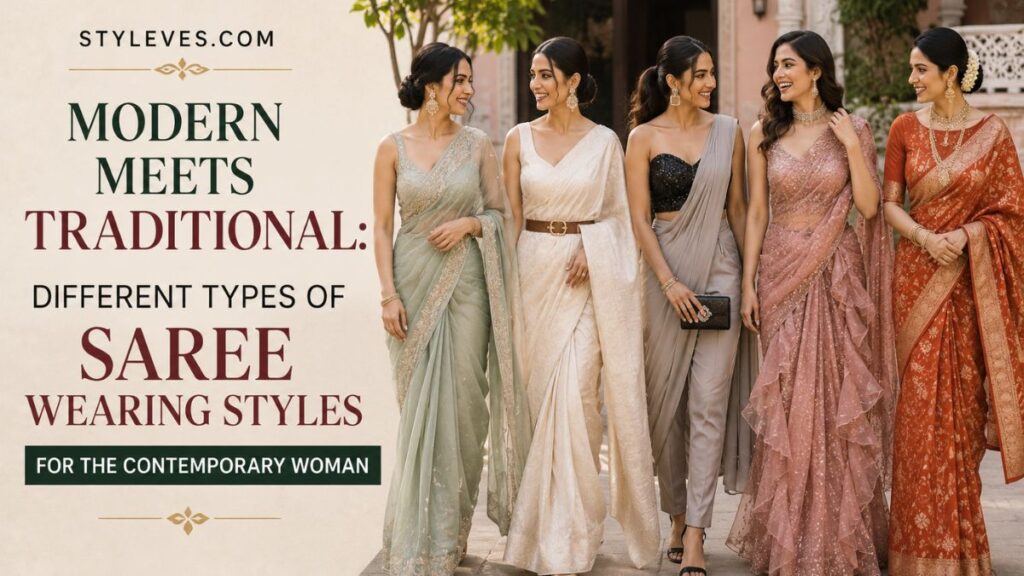
India’s most recognisable piece of clothing is not going to be tied-dyed. With the evolution of fashion, even wearing sarees has evolved, from age-old traditions of a region to experimental cutting-edge saree wearing styles for parties that feel as modern as they are. This detailed guide offers a look at how many different styles of saree draping actually exist and what types are appropriate for various occasions. Learn to build a whole look, from the fabric to jade & make-up.
Why the Saree Is Fashion’s Most Intelligent Garment
No other garment achieves what a saree does. It fits every body without alteration, transforms with a single accessory change, and exists simultaneously as everyday wear and high couture. That intelligence is built into its design.
The saree’s flexibility is most evident in its draping tradition. Different communities across India discovered — entirely independently — that the same length of fabric could be worn in dramatically different ways depending on the cultural context, the occasion, and the personal aesthetic.
That discovery is what gave us 80+ documented regional styles and continues to inspire new contemporary interpretations every season.
The Saree Styling Mindset: Why ‘One Drape Fits All’ Is a Myth
Most women learn one way to drape a saree and stick with it forever. That approach works — but it limits your fashion expression considerably.
Think of saree draping as a language. The basic Nivi drape is the grammar. Regional styles are the dialects. And contemporary experimental drapes are the creative writing.
Mastering even two or three different ways to drape a saree opens up entirely new styling possibilities across weddings, festivals, parties, and professional settings.
How Many Types of Saree Draping Exist? The Real Answer
Fashion experts and historians have recorded over 80 saree draping styles by geography in India. And throw in a bunch of variations with modern fashion, and that number climbs up over 100 styles.
For practical styling purposes, the key categories are:
- Classic regional drapes: Nivi (Andhra Pradesh), Bengali Atpoure (West Bengal), Gujarati Seedha Pallu, Maharashtrian Nauvari, Tamil Madisar, Coorgi, Kerala Mundum Neriyathum
- Festive and wedding drapes: For festivals and weddings, some of the drapes are: Full bridal Nivi, Kataki drape, Tamilian kovil-style drapes
- Party and fashion drapes: Party and fashion drapes can be done in different styles, such as Ruffle, Cape, Belted, Butterfly, Lehenga-style, Pant-style
- Contemporary fusion drapes: Contemporary fusion drapes include Dhoti, Jacket, and Double-saree layered drape
- Ready-to-wear formats: Ready-to-wear collection includes Pre-stitched sarees, concept drapes, ruffle-ready designs
Understanding this spectrum makes you a more versatile saree wearer across every type of occasion.
Classic Regional Saree Draping Styles — A Deep Dive
The Nivi Drape: Andhra Pradesh’s Gift to Indian Fashion
The Nivi is India’s universal saree drape. Originating from Andhra Pradesh, it involves tucking the saree around the waist, forming front pleats, and throwing the pallu over the left shoulder. It suits every body type and every occasion.
To modernise your Nivi, try these approaches:
- Pin the pallu with a statement brooch instead of a safety pin
- Tuck the pallu into the waistband for a structured, shorter look
- Add a waist belt over the pleats for a contemporary definition
- Pair with a structured jacket or blazer over the blouse for office-ready fusion
The Coorgi Drape — Karnataka’s Most Dramatic Style
The Coorgi drape pins the pleats at the back and brings the pallu to the front, creating a dramatic forward display. It is visually bold and movement-friendly. This style is one of the most striking saree draping techniques for formal weddings and cultural events.
The Nauvari Drape — Nine Yards of Maharashtra’s Spirit
The Nauvari uses nine yards and creates a trouser-like silhouette without any stitching. The saree is passed between the legs and tucked behind. This is the traditional dress of Maharashtra’s warrior women. Contemporary stylists have reimagined it in silk, georgette and lightweight cotton for modern wearers.
What Are the Best Saree Wearing Styles for Parties in 2026?
Party sarees live at the intersection of maximum visual impact and practical wearability. You need to look stunning, move freely, and survive three hours of dancing.
Here are the definitive top picks for saree wearing styles for parties this season:
The Ruffle Saree Drape
Ruffles along the saree hem create a dramatic gown-like silhouette. The cascading layers catch light and create movement. This style photographs brilliantly and has become a favourite at reception dinners and sangeet nights. Choose organza or chiffon ruffles in ombre or gradient dyes.
The Butterfly Drape
Thin, fanned-out pleats at the waist create a butterfly-wing effect. Paired with a deep-neck blouse or corset-style top, this drape is unapologetically modern and fashion-forward. Best executed in lightweight chiffon or georgette.
The Pant Saree Fusion
Replace the traditional petticoat with fitted pants, palazzo trousers, or even printed leggings. Drape the saree over this base for an Indo-western look that is comfortable, unique, and deeply photogenic. Ideal for Gen Z and millennial party dressers.
Bride Saree Styling: The Complete Wedding Season Guide
Choosing the Right Bridal Fabric
The bridal fabric decision should come before the colour decision. Fabric determines how the saree drapes, moves, and photographs. For a grand Hindu wedding ceremony, Kanjivaram silk remains the gold standard. For a more contemporary ceremony, tissue silk or organza offers lightness with visual luxury.
Key bridal fabric recommendations:
- Kanjivaram silk: grand ceremony, traditional South Indian wedding — deep red, gold, or jewel tones
- Banarasi brocade: North Indian wedding, phera ceremony — warm red, ivory, deep wine
- Georgette with hand embroidery: destination or intimate wedding — dusty rose, sage, champagne
- Pure handloom cotton: outdoor ceremony or eco-conscious bride — ivory, blush, or natural earth tones
Bridal Jewellery and Makeup Strategy
A Kanjivaram bride should choose gold temple jewellery — a full necklace, matching jhumkas, and a traditional maang tikka. The makeup should be warm — terracotta or brick lips, defined eyes with kohl and kajal.
A contemporary bride in organza can wear polki or diamond jewellery with a nude-rose lip and dewy skin. The makeup should reflect the saree’s lightness.
Dupatta and Floral Accessories
Floral accessories — mogra gajra, rose-petal hair pins, or marigold wrist accents — add dimension to bridal styling that no jewellery can replicate. Match floral colours to the saree’s accent tones for a cohesive look.
Guest Saree Styling: Occasion-Based Recommendations
Morning Ceremony Guests
Choose breathable fabrics in soft pastels or earthy tones. Cotton-silk, linen, or light Chanderi work best. Keep jewellery minimal and makeup fresh. A clean Nivi drape or Gujarati Seedha Pallu communicates elegance without excess.
Evening Reception Guests
Evening receptions are your permission slip to go bold. Metallic tissue, heavily embroidered georgette, or sequinned silk looks spectacular under ambient lighting. Go for a cape drape, lehenga-style drape, or butterfly drape for maximum visual impact.
Budget-Friendly Styling That Looks Premium
A well-draped, well-pressed mid-range saree with correct blouse fit, coordinated jewellery, and neat footwear will always outshine an expensive saree worn carelessly. Invest in tailoring over price tags.
Indian Saree Fashion Trends for 2026: What to Expect
- Handcrafted and handloom revival: Weavers from Varanasi, Kanchipuram, and Pochampally are gaining direct fashion visibility.
- Bold blouse designs: Architectural sleeves, deep-V backs, corset bodices, and embellished high necks are dominating blouse aesthetics.
- Earthy and natural colour palettes: Saffron, burnt sienna, sage green, and warm ivory are replacing ultra-bright festival colours.
- Fusion footwear pairings: Block-heeled sneakers, embroidered loafers, and strappy heeled kolhapuris are all being worn with sarees.
- Embellished pallus and borders: Heavy sequin work, mirror embroidery, and oversized tassels on pallus are a strong 2026 runway statement.
Styling Mistakes to Avoid — Expert Advice
- Wearing the wrong undergarment: A badly fitting petticoat ruins the saree’s silhouette immediately. Invest in well-fitted, colour-matched petticoats.
- Overdoing statement accessories: Choosing too many bold accessories at once creates visual noise. Pick one statement piece and let it lead.
- Inappropriate drape for the event: Wearing an ultra-modern pant-style drape to a traditional puja or religious ceremony may feel out of place. Read the event’s cultural code.
- Neglecting blouse fit: An ill-fitting blouse is the fastest way to ruin a perfect saree look. Always get blouses custom-tailored.
- Skipping saree pre-treatment: Wearing a saree straight off the shelf without starching or steaming results in uncooperative pleats.
Bride vs. Guest Styling Comparison Table
| Styling Element | Bride | Guest |
| Saree Fabric | Kanjivaram, Banarasi, Tissue Organza, Bridal Georgette | Chanderi, Chiffon, Cotton Silk, Georgette, Light Tussar |
| Colour Palette | Deep red, ivory, gold, jewel tones, pastel bridal hues | Pastels, vibrant prints, trendy colours, earthy neutrals |
| Drape Style | Traditional regional — Bengali, Gujarati, Nivi bridal | Modern — Cape, Lehenga-style, Belted, Ruffle, Pant-style |
| Jewellery Weight | Full bridal set — choker, maang tikka, nath, bajuband | Statement earrings or single neckpiece, moderate weight |
| Makeup Intensity | Full bridal makeup with setting spray for all-day wear | Occasion-appropriate — semi-formal to party-ready |
| Footwear | Block heels, embroidered juttis, traditional sandals | Comfortable heels, kolhapuris, strappy flats |
| Comfort Priority | Designed for hours of ceremony, sitting, and rituals | Free movement for dancing, socialising, and long evenings |
| Budget Range | Premium to luxury investment | Moderate — own wardrobe or rental possible |
Frequently Asked Questions
A: A classic Nivi drape is the ideal place to start with. Gentle, easy to learn and adaptable for all body types. When you’re ready, try the belted drape — just like a regular drape, but includes a belt on top to add structure, something more streamlined and fresh.
A: For outdoors, lightweight fabrics like chiffon, georgette and linen sarees are a treat. It is well-ventilated, flexible and has less tendency to tarnish. Well, if it’s a summer outdoor wedding, avoid heavy silk sarees to be comfortable and representable throughout.
A: Absolutely. The party-ready options to wear are the most comfy ones, which will be a pre-stitched saree & pant style drape. They deliver the glamour of a heavy saree with all the practicality of western-style ready-to-wear. Complete the ensemble with a dressy blouse and some statement earrings.
A: These are all exclusively useful to petites, so some little draping lines going vertical and very little pleating would really help. The Nivi or dhoti drape is beautifully complemented with V-neck blouses on curvy personalities. Wide, dramatic pallus looks beautiful on the tall woman. Always check your proportions on the drape before you wear it.
A: Deep Emerald, Burnt Copper, Dusty Mauve and Ivory Gold. Pastel sage, terracotta and powder blue are (more) popular for guests. The top fashion-forward saree draping styles are lehenga-style and cape sarees, which are prominent for wedding events.
Conclusion
Saree never poses a question to you to choose between heritage and modernity. That is a simultaneous six liquid yards. To learn styles of draping is to speak the many dialects of a living fashion language your grandmother spoke fluently, and your granddaughter will wear with pride.
Whether it’s the celebratory visual drama of saree wearing styles for parties, such as the butterfly drape or cape saree, or the understated but eternal authority of a nicely pinned regional Nivi — each way you choose to drape is a colourful, significant statement of yourself and your culture.
Look at the number of saree draping traditions that India has given birth to be inspired by its profound knowledge, and make this your go-to-knowledge while making each outfit decision in future. For a more elaborate inspiration, read our editorial on contemporary festive looks. Wear your six yards with actual wisdom and complete unabashed confidence, every single time you throw them on.
Disclaimer: Styling advice in this article is based on contemporary fashion trends and is intended for general guidance. Regional traditions and personal preferences should always be respected when choosing saree draping styles.