

You have probably reached for coconut oil for hair at some point, hoping it would fix everything from dryness to slow growth. Here is the truth: it works, but only when used correctly. This guide breaks down the real coconut oil benefits for hair, how it actually affects coconut oil for hair growth, and the three quiet mistakes that are cancelling out your results without you realising it.
What Makes Coconut Oil So Effective for Hair?
Before you pour another spoonful onto your scalp, it helps to know why this particular oil has stayed relevant across generations while so many hair trends have come and gone. It is not nostalgia. It is chemistry, and it is worth understanding before you commit another Sunday evening to it.
Coconut oil contains lauric acid, a fatty acid with an unusually small molecular structure. That small size lets it slip inside the hair shaft rather than sitting on the surface the way most oils do. This is the single detail that separates coconut oil from almost everything else sitting on your bathroom shelf.
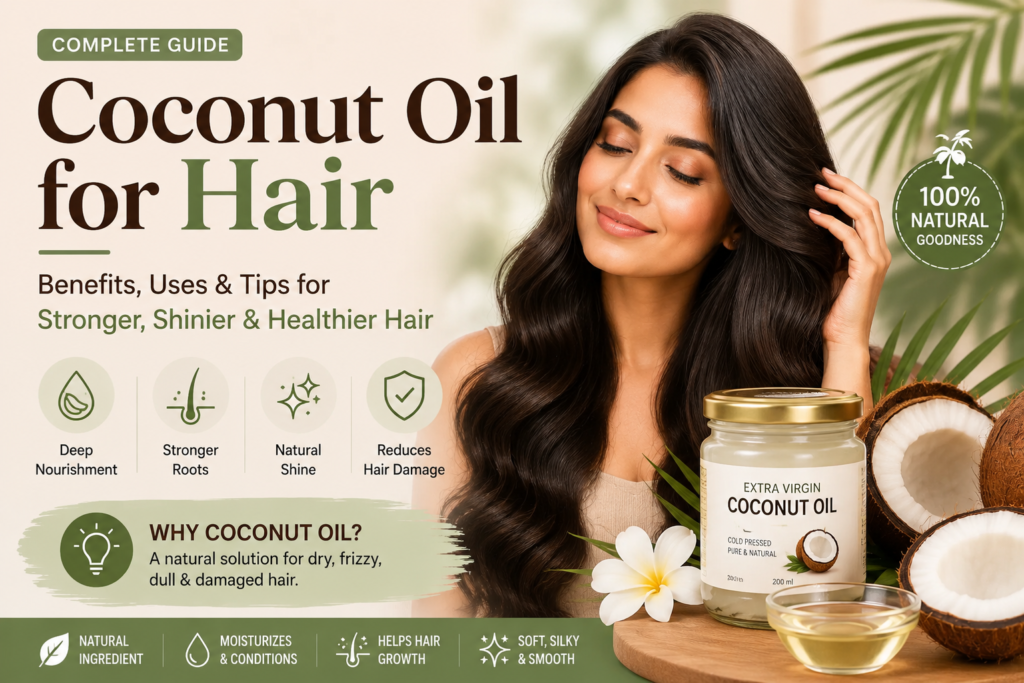
Once it is inside the hair shaft, lauric acid binds directly with keratin, the protein that makes up nearly all of your hair’s structure. This bond reduces how much moisture your hair loses during washing, and moisture loss is exactly what makes hair feel rough, look dull, and break at the first sign of a hairbrush.
The effect does not stop at the strand itself. When you massage the oil in, it also reaches your hair follicles, the tiny structures beneath your scalp responsible for producing every single strand you grow. A calmer, better-nourished follicle environment tends to support steadier, healthier growth over time, even if the change is not visible overnight.
So the next time someone dismisses coconut oil as “just an old home remedy,” you will know there is real, measurable science behind why it has never gone out of style.
7 Proven Benefits of Coconut Oil for Hair
You already know coconut oil is popular. What actually matters is understanding what it does, and why each of these benefits happens the way it does.
1. Reduces Protein Loss and Strengthens Strands
If your hair snaps easily or feels rough right after a wash, you are likely dealing with protein loss, and it happens more often than most people expect. Research on hair fibres has repeatedly found that coconut oil, applied before or after washing, lowers this loss significantly compared to mineral oil or no treatment at all. Less protein loss translates into fewer split ends, less breakage at the mid-lengths, and hair that holds its shape for longer stretches between trims.
2. Supports Coconut Oil Benefits for Hair Growth
This is the benefit almost everyone asks about first, and understandably so. The coconut oil benefits for hair growth are not about some overnight miracle serum effect, no matter what a viral video might promise you. They come from consistency, patience, and a scalp environment that is finally being taken care of. When your scalp stays well-moisturised and your follicles are not weighed down by inflammation or persistent dryness, hair simply has a better environment to grow in. Long-term users tend to notice fuller-looking hair after several months of steady use, not after a single weekend treatment.
3. Deeply Moisturizes Coconut Oil and Curly Hair
Curly and coily textures lose moisture faster than straight hair because of the way the hair cuticle is shaped, with more lifted layers that let hydration escape. This is exactly where coconut oil and curly hair work particularly well together. The oil coats each strand and seals in moisture, reducing the frizz that appears the moment humidity rises outside. If you have ever felt like your curls “drink” every product you own and still feel dry an hour later, this difference is likely why coconut oil feels noticeably different on contact.
4. Soothes the Scalp Through Regular Scalp Massage
A scalp massage with coconut oil is not only relaxing, though that is a welcome bonus after a long week at work. It improves circulation to the scalp, helps loosen everyday product buildup, and can ease dryness or mild flaking that tends to worsen with weather changes. Five minutes, done twice a week, is often enough to notice a calmer, less itchy scalp within just a few weeks of starting.
5. Adds Natural Shine and Smoothness
Dull hair is usually a sign of a rough, raised cuticle layer catching light unevenly instead of reflecting it. Coconut oil smooths that layer down, which is why hair tends to look visibly shinier almost immediately after use, even before any long-term changes kick in. You may not need a separate shine serum at all if your oiling routine stays consistent through the week.
6. Shields Hair from Heat and Environmental Damage
Applying a light layer before heat styling or before stepping out into strong sun creates a thin barrier that reduces direct damage to the hair shaft. It will not make your hair completely heatproof, and no product truly can, but it noticeably softens the impact of daily wear and tear, especially if your hair is colour-treated or chemically processed.
7. Works as a Deep-Conditioning Coconut Oil Hair Mask
Used once a week, a coconut oil hair mask left on for thirty to forty-five minutes gives your hair far more time to absorb oil than a quick rinse-through treatment ever could. This is the kind of treatment worth setting aside a Sunday evening for, particularly when your hair feels tired from constant styling, hard water, or sudden shifts in weather.
Does Coconut Hair Oil Help Hair Growth? Separating Fact from Myth
This is where expectations genuinely need a reality check, and it is better to hear it now than after months of disappointment. The honest answer to does coconut hair oil help hair growth is that it supports the conditions for growth rather than triggering brand-new growth directly. No oil, coconut or otherwise, can override genetics, hormonal shifts, or nutritional deficiencies sitting underneath the surface.
What coconut oil can genuinely do is reduce the breakage that makes hair look like it is not growing, even when it actually is growing just fine underneath. So if you are still wondering will coconut oil help hair grow, the fair, non-hyped answer is this: it helps you keep more of the hair you already produce, and that retained length is often what people mistake for faster growth in the mirror.
Is Coconut Oil Good for Curly Hair? What Curly-Haired Readers Should Know
The short answer to is coconut oil good for curly hair is yes, with one important condition attached: quantity matters here more than it does for almost any other hair type. Curly hair genuinely benefits from added moisture, but too much oil can flatten your natural curl pattern and leave strands looking greasy instead of defined and bouncy.
A better approach is applying a small amount to damp hair, focusing on the ends rather than the roots, and adjusting the quantity based on how your curls respond over a handful of uses. Every curl pattern reacts a little differently to oil, so give it two or three honest attempts before deciding it simply is not for your hair type.
Black Coconut Oil for Hair: Is It Really Different from Regular Coconut Oil?
You may have come across black coconut oil for hair at some point and quietly wondered whether it is simply clever marketing wrapped around the same old product. It is not. Black coconut oil is made by roasting the coconut flesh before extraction, and that single extra step changes both its colour and its underlying composition.
This roasting process increases the concentration of antioxidants compared to standard cold-pressed coconut oil sitting on most supermarket shelves. Traditionally used in South Asian households for generations, it is often associated with deeper scalp nourishment, though its core benefits still trace back to the same lauric acid base found in regular coconut oil.
3 Mistakes That Cancel Out Coconut Oil’s Benefits
Here is the part most guides quietly skip over. Coconut oil itself is rarely the actual problem. How you are using it usually is, and small adjustments make a bigger difference than switching products entirely.
Mistake 1 — Applying Too Much or Too Often
More oil does not translate into more benefit, no matter how tempting it feels to double up when your hair looks dry. Over-application leads to buildup that clogs follicles and weighs hair down, quietly undoing the shine and softness you were chasing in the first place.
Mistake 2 — Using It on the Wrong Hair Type Without Adjusting
Fine, low-porosity hair needs far less oil than thick, high-porosity hair does, yet most people apply the exact same amount regardless of their texture. Ignoring that difference is one of the fastest ways to end up disappointed with results that were never going to match your expectations to begin with.
Mistake 3 — Skipping a Proper Coconut Shampoo and Conditioner Wash-Out
Oil left in for too long without a thorough wash creates residue that a single round of regular shampoo cannot always fully remove. Following up with a proper coconut shampoo and conditioner combination helps clear leftover oil while still reinforcing moisture, instead of stripping your strands of everything you just applied.
How to Use Coconut Oil for Hair the Right Way (Step-by-Step)
You do not need a complicated eight-step routine here. You need a simple one that you will actually stick to on a normal, busy week.
- Warm a small amount of oil between your palms before applying it to your hair
- Focus on mid-lengths and ends first, adding to roots only if your scalp genuinely feels dry
- Leave it on for at least thirty minutes, or overnight for a deeper, more thorough treatment
- Wash it out completely with a sulphate-free shampoo, rinsing twice if needed
- Repeat once or twice a week rather than daily, giving your scalp time to breathe in between
Stick to this for six to eight weeks before you judge the results either way. Hair habits take real time to show up, and coconut oil is no exception to that rule, however patient you would rather not be.
Coconut Oil for Hair Growth: Quick Comparison Table
| Factor | Regular Use (1-2x/week) | Overuse (Daily) |
| Moisture Balance | Well-conditioned, soft strands | Greasy, weighed-down texture |
| Scalp Health | Improved circulation, less flaking | Clogged follicles, buildup |
| Shine | Natural, consistent glow | Excessive, sticky appearance |
| Breakage | Noticeably reduced over time | No added benefit beyond baseline |
| Best For | All hair types, quantity adjusted | Not recommended for any hair type |
Coconut Oil Benefits for Hair Growth and Beyond: Your Next Step
By now, you know coconut oil is not a magic fix, and honestly, that is a genuinely useful thing to know before you spend weeks waiting for overnight results that were never coming. What it actually offers is steady, cumulative support: fewer split ends, a calmer scalp, softer texture, and hair that holds onto its length instead of quietly losing it to breakage every few weeks. The coconut oil benefits for hair growth show up gradually rather than instantly, and that patience is genuinely part of what makes the results last once they finally arrive. Start small, stay consistent through the first two months, and let your own hair tell you exactly how much it actually needs from here.
Coconut oil does not speed up the biological rate of hair growth itself. It reduces protein loss and breakage, meaning you retain more length over time, which gives the visual appearance of faster growth without actually changing your natural growth cycle.
It is good for curly hair when used in small amounts. Too much product flattens curl pattern and looks greasy, so apply sparingly to damp ends first and adjust the quantity based on how your specific curl type responds.
Black coconut oil is made by roasting the coconut before extraction, giving it a darker colour and a higher antioxidant concentration than standard cold-pressed coconut oil, though both share the same core lauric acid benefits at their base.
Yes. Pairing coconut shampoo and conditioner with periodic oil treatments helps reinforce moisture without leaving heavy residue behind, as long as the oil treatment is washed out thoroughly before styling or repeating the routine again.
Once or twice a week is generally enough for most hair types. Leave it on for at least thirty minutes before washing it out completely, since daily application often leads to buildup rather than any additional benefit over time.
Yes. Overuse causes product buildup, greasy roots, and reduced moisture absorption over time, particularly on fine or low-porosity hair, which is exactly why quantity and frequency matter just as much as the oil itself.
Disclaimer
This article is for general informational purposes only and does not replace professional dermatological or trichological advice. Individual hair type, scalp condition, and product results vary from person to person. Consult a specialist before starting any new hair care routine.