
Walk into any Indian ethnic wear store before a wedding or festival and ask for a lehenga. There’s a real chance the salesperson will show you a ghagra. These two garments are so often used interchangeably that most people assume they’re the same thing with different names. They’re not. And understanding the actual difference between ghagra and lehenga isn’t just about playing fashion trivia; it saves you from making two huge shopping mistakes. First, it stops you from overpaying for a heavy outfit when you actually need something lightweight you can dance in for six hours. Second, it prevents you from accidentally underdressing for a high-profile wedding reception where a casual folk outfit might look out of place.
Once you know what sets these two traditional outfits apart, you can buy with total confidence and land the exact look you want. Let’s settle the lehenga vs ghagra debate once and for all. Here’s the full breakdown: what each one actually is, where it comes from, how they differ in construction and styling, and which one you should reach for depending on where you’re going.
What Is a Ghagra? Features, Fabric and Uses
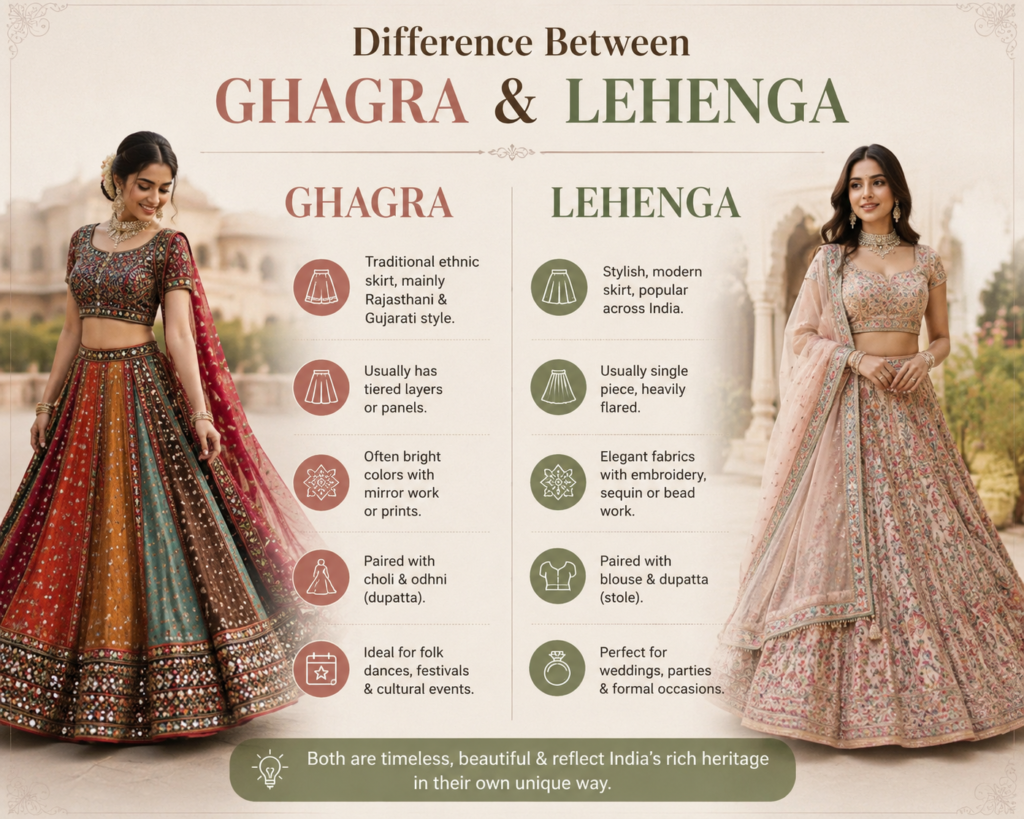
The ghagra is one of India’s oldest traditional garments. It is a long, voluminous skirt with roots in Rajasthan, Gujarat, and the broader North Indian folk tradition. The word itself comes from the Sanskrit word for a flowing skirt, and the garment has been worn continuously across rural and urban communities for centuries.
A ghagra is typically made from cotton, silk, or synthetic fabric in bright, bold colours — often with mirrorwork, gota patti, bandhani prints, or block-printed patterns. The silhouette is gathered or pleated at the waist, creating a full, swirling skirt that opens dramatically when the wearer moves or dances. This characteristic flare is deliberate — ghagras are built for comfort, movement, for folk dance, for festivals where women spin, and the skirt becomes part of the visual spectacle.
The ghagra choli is the complete ensemble — the skirt paired with a fitted blouse (choli) and a dupatta draped over the head or shoulders. This is the outfit you see at Navratri in Gujarat, at Rajasthani folk performances, and at village festivals across North India.
What Is a Lehenga? Design, Fabric and Occasions
The lehenga evolved from the same skirt-based tradition but developed into something more formal, more heavily embellished, and distinctly occasion-specific. Where the ghagra belongs to folk tradition and everyday festive wear, the lehenga belongs to weddings, formal ceremonies, and events where dressing up carries social weight. The lehenga became especially popular during the Mughal period, when royal women wore richly embroidered versions made from luxurious fabrics.
A lehenga is a long skirt — but the construction is different from a ghagra. Designers build these skirts using heavy fabrics like raw silk, velvet, or stiff brocade. Inside the skirt, layers of canvas lining and stiff net mesh (can-can) force the fabric outward into a wide umbrella shape. Add heavy hand-embroidery like zardozi, metallic threadwork, or embedded stones, and you get a statement piece made specifically for high-stakes events like weddings and grand receptions.
The lehenga choli — also called a lehenga choli or ghagra choli in some regional contexts — pairs the skirt with a fitted blouse and a long dupatta, typically styled over the head for bridal looks or draped over the arm for party wear.
Difference Between Ghagra and Lehenga: Key Differences
If you’re making a quick shopping decision right now, here is how the two compare on the basics:
| Factor | Ghagra | Lehenga |
| Origin | Rajasthan, Gujarat folk tradition | Mughal court, North Indian formal tradition |
| Fabric | Cotton, light silk, synthetic | Heavy silk, velvet, net, brocade |
| Embellishment | Mirrorwork, bandhani, block print | Zardozi, sequins, heavy embroidery |
| Silhouette | Fully gathered, maximum flare | Structured pleats, controlled volume |
| Occasion | Navratri, folk festivals, casual festive | Weddings, sangeet, formal ceremonies |
| Price Range | ₹500 – ₹5,000 typically | ₹5,000 – ₹5,00,000+ |
| Weight | Lightweight — easy to wear for hours | Heavier — embellishment adds weight |
| Best Used For | Sangeet, Navratri Garba, Haldi, family festivals | Weddings, grand receptions, bridal wear |
The clearest single difference between ghagra and lehenga is this: a ghagra is festive and folk-rooted, built for movement and colour. A lehenga is formal and heavily crafted, built for occasions where the outfit is part of the statement.
Ghagra Choli vs Lehenga: Which One Should You Wear?
Ghagra choli is the right choice for Navratri, Garba nights, Teej, Pongal celebrations, Holi functions, and casual family festive gatherings. The lightweight fabric, bright colours, and generous flare make it practical for events where you’ll be dancing, moving, and wearing the outfit for six hours without wanting to sit down from exhaustion.
Lehenga is the right choice for wedding functions — the bride’s reception, sangeet ceremony, pre-wedding shoots, and formal engagement events. The heavy embellishment and structured silhouette read as appropriately formal for high-occasion events. As a wedding guest, a lehenga in a non-bridal colour signals that you’ve dressed for the occasion without competing with the bride.
The overlap zone (where both could work) is a semi-formal family function, a festive puja at home, or a casual cousin’s wedding in a smaller town where the dress code is flexible. In that overlap, your comfort and personal style should decide.
Lehenga vs Ghagra: How to Choose the Right One
If you’re still choosing between lehenga vs ghagra for an upcoming date on your calendar, run through these three quick checks:
- How long will you be on your feet? If you need to run around managing arrangements, sit on the floor for puja rituals, or dance endlessly, grab a breathable ghagra. If the event is short, formal, and mostly about photos, go with a structured lehenga.
- What is the dress code setting? Evening receptions in banquet halls call for the sheen of a silk lehenga. Daytime, outdoors, or home celebrations suit a colorful, mirror-work ghagra better.
- What is your price limit? Because lehengas take dozens of hours of hand-stitching and heavy materials, they cost more. Ghagras give you rich ethnic style without stretching your budget.
Lehenga vs Ghagra for Wedding — Bride and Guest Considerations
For brides, the lehenga is the overwhelming choice at Indian weddings — the weight and embellishment signal bridal status in a way a ghagra simply doesn’t. A bridal lehenga in red, deep maroon, blush pink, or ivory with zardozi or thread work is the most photographed silhouette in Indian wedding culture for a reason — it photographs beautifully, holds its shape across a long day, and carries visual weight proportional to the occasion.
For wedding guests, the ghagra choli vs lehenga decision comes down to the specific function. At the sangeet or haldi, a ghagra works perfectly and is far more practical for dancing. At the main wedding ceremony or reception, a lehenga reads as more appropriately formal.
The unspoken rule most experienced guests follow: save the lehenga for the wedding ceremony and the ghagra for the pre-wedding functions where everyone is actually dancing.
How to Style a Ghagra and Lehenga
Styling a ghagra: Let the skirt do the work. Keep the choli simple and the jewellery bold — heavy silver or oxidised jewellery pairs better with ghagra folk aesthetics than delicate gold. Mirror-work juttis on the feet and a contrasting dupatta draped loosely complete the look without overdoing it.
Styling a lehenga: Balance the heaviness of the skirt with the blouse choice. A heavily embellished lehenga works better with a simpler choli and statement earrings rather than layering heavy jewellery on top of already-dense embroidery. Let the lehenga be the focal point — don’t compete with it.
Both garments deserve to be worn, not just owned. The ghagra for every Navratri you almost skipped because you had nothing to wear. The lehenga for every wedding you attended in a salwar and quietly wished you’d dressed up more.
Final Verdict: Difference Between Ghagra and Lehenga
When you break down the difference between ghagra and lehenga, neither outfit is “better” than the other—they just answer different needs. Keep a heavy lehenga in your wardrobe for big, formal wedding days, and count on a flowy ghagra whenever you want an effortless, festive style that lets you enjoy the party.
Ready to find your next favorite ethnic look? Check out the latest handcrafted collections on Styleves to upgrade your festive closet today!
FAQs
The main difference between ghagra and lehenga is in fabric, embellishment, and occasion. A ghagra is lightweight, brightly coloured, and folk-rooted — made for festivals, Navratri, and casual festive events. A lehenga is heavier, densely embellished with zardozi or thread work, and formal — designed for weddings, sangeet ceremonies, and high-occasion events.
Not exactly. Ghagra choli vs lehenga choli comes down to construction and occasion. Both are three-piece ensembles — skirt, blouse, and dupatta — but a ghagra choli uses lighter fabric with folk embellishment like mirrorwork and bandhani for festive occasions. A lehenga choli uses heavier fabric with formal embellishment like zardozi and sequins for weddings and ceremonies.
For the main wedding ceremony and reception — lehenga. The structured silhouette and heavy embellishment are proportional to the formality of the event. For pre-wedding functions like sangeet, haldi, or garba night — ghagra choli is more practical, more comfortable for dancing, and completely appropriate.
Ghagras are traditionally worn for Navratri and Garba celebrations, Teej, Holi functions, Rajasthani and Gujarati folk festivals, and casual family festive gatherings. The lightweight construction and bold colours make them ideal for events involving dancing and extended wear across several hours.
Lehengas use heavier formal fabrics — silk, velvet, satin, net, and brocade — to support dense embellishment. Ghagras use lighter fabrics — cotton, light silk, georgette, and synthetic blends — that allow the gathered skirt to flare freely during movement. Fabric choice is one of the clearest ways to distinguish the two garments immediately.
Chaniya Choli is the Gujarati name for what North India calls ghagra choli — a gathered skirt, fitted blouse, and dupatta traditionally worn during Navratri. The Chaniya Choli is typically characterised by mirror embroidery, bright colours, and generous skirt volume designed for Garba dancing. It’s the same garment category as a ghagra choli, with regional naming differences.
A ghagra typically ranges from ₹500 to ₹5,000 depending on fabric and embellishment. A lehenga starts around ₹5,000 and extends to ₹5,00,000 or more for bridal pieces with heavy handwork. The price gap reflects the fabric weight, embellishment density, and craftsmanship time that separates casual festive wear from formal occasion clothing.
You can, but a ghagra choli is more appropriate and more practical for Navratri. Lehengas are heavier and more structured — not ideal for hours of Garba dancing. A ghagra’s lightweight fabric and full flare are specifically suited to the movement Navratri requires. Save the lehenga for a wedding function where the formality is warranted.
A ghagra is generally more comfortable because it is lighter, less structured, and designed for movement. A lehenga, especially a bridal lehenga, can be significantly heavier due to multiple layers, can-can, and intricate embroidery.