

Walk into any nail salon in 2026, and the menu reads like a second language. Gel, dip, acrylic, shellac, polygel – and that is before you even get to the shape or finish. If you have ever sat down in a salon chair and just pointed at something without knowing what it actually was, this guide is for you.
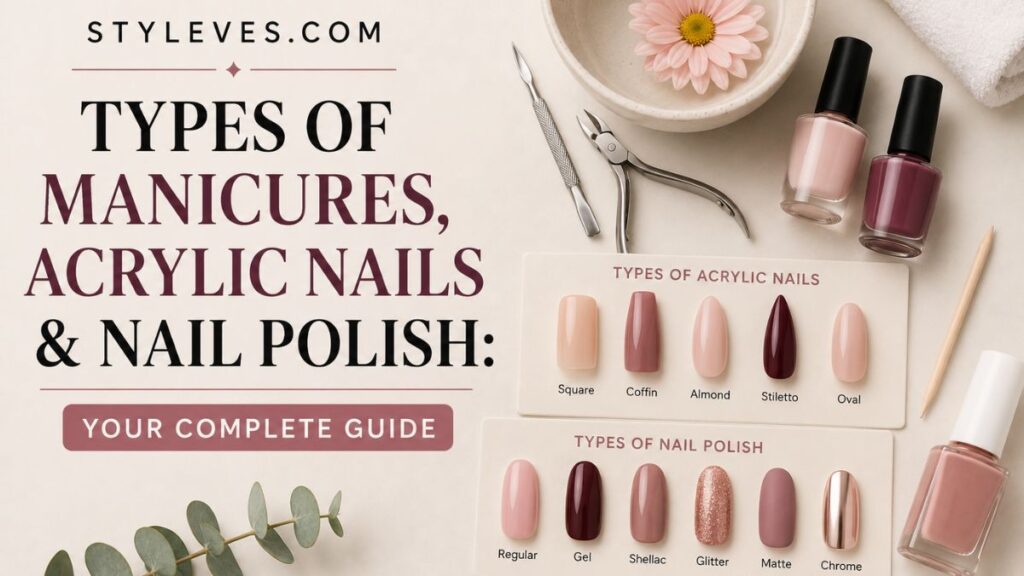
Here is everything you need to know about types of manicures, types of acrylic nails, and types of nail polish – explained simply, so you can walk in knowing exactly what to ask for.
What Is a Manicure Pedicure? Key Differences Explained
A manicure is a cosmetic nail treatment for the hands. It covers cleaning, shaping, buffing, cuticle care, and polish application. A pedicure is the same process applied to the feet, with added exfoliation and a foot soak to soften skin.
What is a manicure pedicure when booked together? Most salons offer them as a combined service – you get both done in one appointment, usually at a discounted bundle price. A basic manicure takes 30–45 minutes; a pedicure takes slightly longer. Together, expect 60–90 minutes depending on the salon.
The core steps in both services are the same: remove old polish, shape the nails, treat the cuticles, moisturise, and apply fresh colour.
Different Types of Manicures Explained
Classic Manicure
A classic manicure is clean, quick, and affordable – typically 30 minutes from start to finish. Nails are trimmed, filed, buffed, and painted with regular polish. No curing lamp, no extensions.
It lasts around 5–7 days before chipping begins. Best for people who like switching colours often or who have naturally strong nails.
French Manicure
A nude or pale pink base with a clean white tip. The French manicure has been around for decades and still does not look dated, because simplicity rarely does. In 2026, salons will offer coloured-tip variations too, from pastel pink to chrome gold.
It works best with gel or hard gel to keep the white tip crisp and chip-resistant for 2–3 weeks.
Gel Manicure
Gel polish is cured under a UV or LED lamp, which is what makes it significantly more durable than regular polish. A gel manicure lasts 2–3 weeks without chipping and dries instantly. No smudging on the way out of the salon.
The trade-off: removal requires soaking in acetone. Skipping proper removal can thin the nail plate over time.
Acrylic Manicure
Acrylics use a liquid monomer and powder polymer that are mixed and sculpted directly onto the nail. They harden in the air, and no lamp is needed. The result is strong, durable extensions that can be shaped into almost any style.
An acrylic manicure lasts 3–4 weeks with a fill every 2–3 weeks as the natural nail grows. This is the go-to service for people who want length and nail art.
Dip Powder Manicure
No lamp, no liquid monomer. Dip powder involves coating the nail in a bonding agent, then dipping it into coloured powder, repeated in layers for opacity and strength. It sits somewhere between gel and acrylic in terms of durability and lasts 3–4 weeks.
It is gentler on nails than acrylic and gives a natural-looking, chip-resistant finish without extensions.
Types of Acrylic Nails: Shapes That Define Your Look
The shape of your acrylics changes the entire feel of the manicure. Here are the most popular acrylic nails types in 2026:
Square
Flat across the top, straight sides, sharp corners. Square nails look bold and structured. They are the most chip-resistant shape because there are no tapered edges to catch and break. Best on medium to long lengths.
Coffin / Ballerina
Tapered sides that come to a flat, squared-off tip – like the toe box of a ballet shoe. Coffin and almond are the dominant shapes in 2026 – coffin is the first choice for maximalist designs because the flat tip gives more canvas for chrome, rhinestones, and 3D nail art. Requires medium to long length to work.
Almond
Tapered sides that come to a soft, rounded point. Almond nails are elegant, make fingers look longer, and work with everything from nude polish to intricate nail art. One of the most requested shapes in salons this year.
Stiletto
The most dramatic of all the different types of acrylic nails. Stiletto nails are filed to a sharp, pointed tip, striking as an accessory but genuinely difficult for daily tasks like typing. Best reserved for events or people who commit fully to the aesthetic.
Oval
Straight sides that curve gently into a rounded tip, a softer version of almond. The oval shape is perfect for active or longer nail lengths and flatters most hand types with its approachable, balanced look. It is also one of the easiest shapes to maintain between salon visits.
Types of Nail Polish: Finishes, Formulas & Differences
The formula and finish you choose determines how the manicure looks, lasts, and feels. Here is a breakdown of the main types of nail polish:
- Regular Nail Polish – Air-dries, easy to apply at home, easy to remove. Lasts 5–7 days. Best for casual wear or frequent colour changes.
- Gel nail Polish – Requires a UV/LED lamp to cure. Glossy, chip-resistant, lasts 2–3 weeks. Must be soaked off properly to avoid nail damage.
- Shellac Polish – A CND brand hybrid of gel and regular polish. Thinner than gel, but cures under UV for the same durability. A popular salon choice for natural nail overlays.
- Dip Powder Polish- Layered powder formula. No lamp required. Long-lasting and strong, with a thicker finish than gel.
- Matte Nail Polish – Any formula applied with a matte topcoat for a flat, non-shiny finish. Works over regular or gel polish. A clean, modern look that photographs beautifully.
- Chrome / Metallic Nail Polish – Applied as a powder over gel for a mirror-like, reflective finish. One of the most requested finishes in 2026 salons.
- Glitter Nail Polish – Suspended glitter particles in a clear or coloured base. Best used as an accent nail or topcoat layer.
Which Type of Manicure Should You Choose?
- You want something quick and low-commitment → Classic manicure with regular polish.
- You want durability without extensions → Gel manicure or dip powder.
- You want length and the ability to wear nail art → Acrylic manicure.
- You want length without harsh chemicals → Dip powder with nail tips.
- You want the cleanest, most natural look → French manicure with gel.
The right choice is the one that fits your lifestyle, not the most popular option on social media. If you change your mind about colour often, gel works better than acrylics. If your nails break constantly, acrylics give you a strong canvas to work with.
FAQs About Types of Manicures, Acrylic Nails & Nail Polish
The most common types include classic, French, gel, acrylic, and dip powder manicures. Each varies in durability, finish, and how they affect the natural nail. Gel and dip powder are the best options for chip resistance without extensions.
A manicure treats the hands and nails; a pedicure treats the feet. Together as a combined service, they typically take 60–90 minutes. Both include cleaning, shaping, cuticle care, and polish application.
Coffin, almond, square, stiletto, and oval are the five main acrylic nail shapes. Coffin and almond are the most requested in salons this year for their elongating, versatile appearance.
Regular polish air-dries and lasts 5–7 days. Gel polish cures under UV and lasts 2–3 weeks. Shellac is a hybrid formula. Dip powder is layered without a lamp and lasts 3–4 weeks. Matte and chrome are finish options applied over these formulas.
Classic manicure: 5–7 days. French manicure (gel): 2–3 weeks. Gel manicure: 2–3 weeks. Acrylic manicure: 3–4 weeks with fills. Dip powder manicure: 3–4 weeks.
Acrylic nails can thin the nail plate if removed incorrectly or left too long without maintenance. Getting them properly filled every 2–3 weeks, avoiding DIY removal, and letting nails breathe between sets keeps damage minimal.
A classic manicure with regular polish is the easiest starting point, low cost, easy to remove, and forgiving of mistakes. Once comfortable, gel manicures are the best next step for better longevity.